
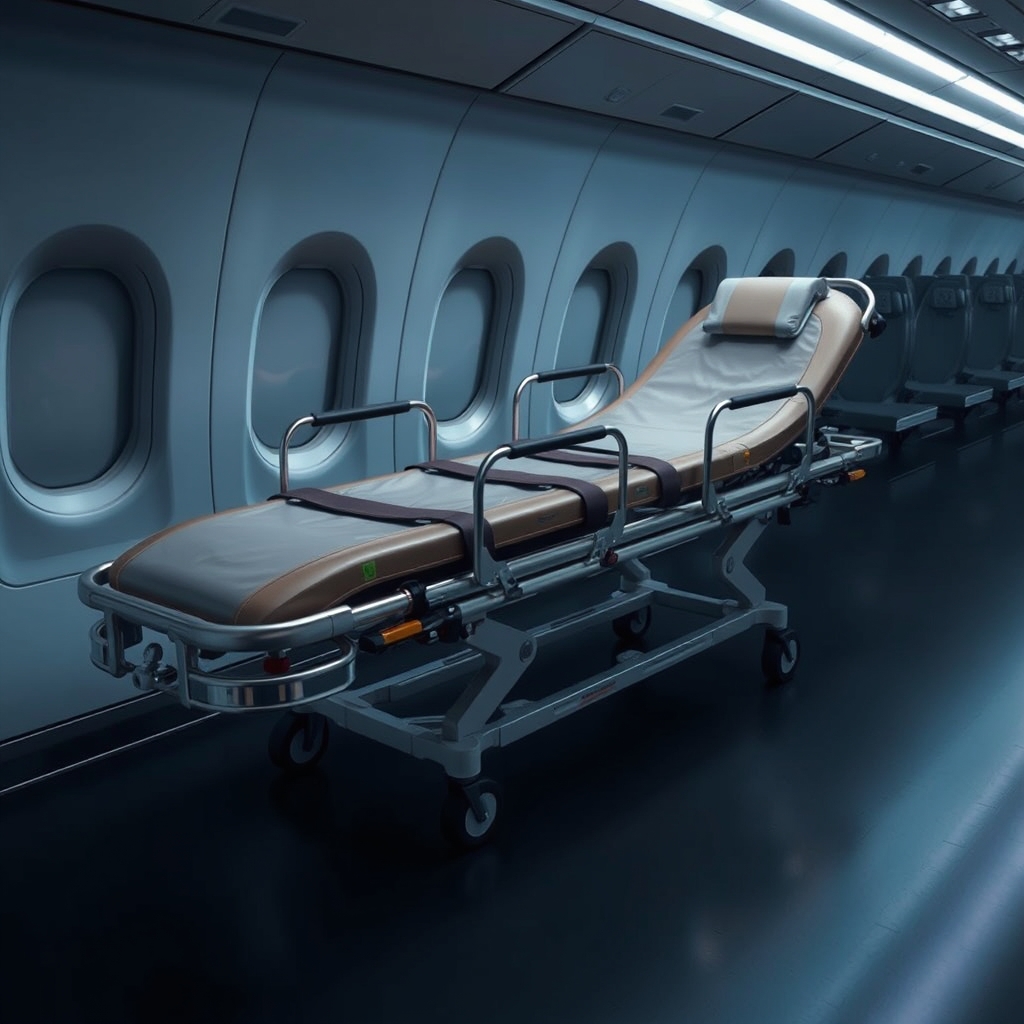
The Essential Guide to Commercial Airline Stretcher Services for Safe Patient Transport
When a loved one or a patient requires medical transport over long distances, the logistics can be overwhelming. A offers a practical and cost-effective solution for moving individuals with limited mobility or medical needs. Unlike dedicated air ambulances, which are often reserved for critical emergencies, commercial airline stretchers allow patients to travel on scheduled flights while lying flat, ensuring both comfort and medical stability. This service bridges the gap between regular air travel and emergency medical evacuation, making it accessible for a wider range of non-critical but serious conditions.
Learn more about airline stretcher Canada and how it applies to your specific needs.
Understanding how this service works is crucial for families, medical coordinators, and healthcare providers. The process involves careful planning, coordination with airlines, and adherence to strict safety protocols. For residents of Canada, particularly those in western provinces, options like services provide a reliable way to repatriate patients or transfer them to specialized medical facilities. These services are designed to accommodate patients who need to remain supine during the flight, with medical equipment and trained attendants on board to monitor vital signs.
In this comprehensive guide, we will explore every aspect of commercial airline stretcher transport, from booking procedures and medical requirements to cost comparisons and regional availability. Whether you are a medical professional arranging a transfer or a family member seeking the best care for a relative, this article will equip you with the knowledge needed to make informed decisions.
What Is a Commercial Airline Stretcher and How Does It Work?
A commercial airline stretcher is a specially designed stretcher that fits into a section of a commercial aircraft, typically in the economy or business class cabin, where several seats are removed to create a flat surface. The patient is secured onto the stretcher using straps and padding, and a medical escort or nurse remains nearby throughout the flight. The stretcher is usually installed on a frame that attaches to the aircraft’s seat tracks, ensuring stability during takeoff, landing, and turbulence.
The booking process for a commercial airline stretcher is more complex than a standard ticket. It requires advance notice—often 48 to 72 hours—so the airline can coordinate seat removal, weight distribution, and safety checks. Airlines such as Air Canada, WestJet, and major US carriers offer this service, but availability varies by route and aircraft type. For instance, services are available through Calgary and Edmonton international airports, connecting patients to destinations across Canada and internationally.
During the flight, the patient is attended by a medical professional—usually a nurse or paramedic—who is trained to handle inflight emergencies. The medical escort brings necessary equipment like oxygen tanks, suction devices, and monitoring gear. The airline also requires a medical clearance form signed by the patient’s physician, detailing the diagnosis, medications, and any special needs. This ensures that the patient is stable enough to travel and that the airline can accommodate the medical requirements.
Medical Criteria for Stretcher Patient Transport
Not every patient is a candidate for commercial airline stretcher transport. The decision depends on medical stability, the need for continuous care, and the ability to tolerate the flight environment. Common conditions that warrant stretcher transport include spinal injuries, post-surgical recovery, severe fractures, respiratory conditions requiring oxygen, and neurological disorders that limit mobility. Patients must be able to lie flat for extended periods, as the stretcher does not recline further.
Before booking, a thorough medical assessment is conducted. The patient’s physician must complete a Medical Information Form (MEDIF) or an equivalent document, which is reviewed by the airline’s medical department. Key factors include blood pressure stability, oxygen saturation levels, pain management requirements, and the risk of complications during flight. For example, patients with deep vein thrombosis or pulmonary embolism may need additional precautions. services often include pre-flight consultations to ensure all criteria are met.
It is also important to consider the patient’s mental state. Anxiety or confusion can complicate the journey, so sedatives or anti-anxiety medications may be prescribed. The medical escort is trained to manage these situations, but the patient’s cooperation is essential. In some cases, a family member may be allowed to accompany the patient in a nearby seat, providing emotional support.
Comparing Commercial Airline Stretchers with Air Ambulance Services
One of the most common questions is whether to use a commercial airline stretcher or a dedicated air ambulance. Both have their advantages, but the choice depends on the patient’s condition, budget, and urgency. Air ambulances are essentially flying intensive care units, staffed by critical care teams and equipped with advanced life support. They are ideal for unstable patients or those requiring continuous intervention. However, they are significantly more expensive—often costing $50,000 to $150,000 for a cross-country flight.
In contrast, a commercial airline stretcher is much more affordable, typically ranging from $3,000 to $15,000 depending on the route and airline. For patients who are stable but need to lie flat, this option offers a balance of safety and cost-effectiveness. For example, services are available for emergencies, but many non-urgent transfers can be handled via stretcher on a scheduled flight. The trade-off is that commercial flights have fixed schedules and may involve layovers, which could be tiring for the patient.
Another difference is the level of medical support. On a commercial flight, the medical escort is typically a registered nurse or paramedic, not a physician. The equipment is limited to what can be carried onboard, such as portable oxygen concentrators and basic monitoring devices. For patients requiring ventilator support or continuous IV medications, an air ambulance is more appropriate. However, for post-operative recovery or chronic conditions, the commercial stretcher option is often sufficient.
Step-by-Step Process for Booking a Commercial Airline Stretcher
Booking a commercial airline stretcher involves several steps, and working with a specialized medical travel agency can simplify the process. Here is a typical workflow:
1. Initial Consultation: Contact a medical transport coordinator to discuss the patient’s condition, destination, and travel dates. They will gather medical records and assess eligibility.
Learn more about commercial airline stretcher alberta and how it applies to your specific needs.
2. Medical Clearance: The coordinator works with the patient’s physician to complete the airline’s medical forms. This includes a detailed history, current medications, and a statement of fitness to fly.
Learn more about stretcher patient transport and how it applies to your specific needs.
3. Airline Coordination: The coordinator contacts the airline to request stretcher installation. This involves reserving a block of seats (usually 6 to 9 seats) that will be removed. The airline also needs to confirm that the aircraft type can accommodate the stretcher and that the weight distribution is within limits.
4. Escort Arrangement: A qualified medical escort is assigned to accompany the patient. The escort arrives at the airport early to set up the stretcher and brief the flight crew.
5. Airport Logistics: The patient is transported to the airport via ambulance or medical van. At the gate, they are boarded before other passengers using a special wheelchair or stretcher lift. The medical escort stays with the patient throughout boarding.
6. Inflight Care: During the flight, the escort monitors vital signs, administers medications, and assists with toileting if needed. The flight crew is trained to provide assistance in case of an emergency.
7. Arrival and Transfer: Upon landing, the patient is deplaned first and transferred to a waiting ground ambulance or medical facility.
Regional Availability: Stretcher Services in Canada and Alberta
Canada has a well-established network for commercial airline stretcher services, with major hubs in Toronto, Vancouver, Calgary, and Edmonton. For patients in Alberta, options are particularly valuable due to the province’s vast geography and remote communities. Many patients from northern Alberta or rural areas need to travel to Edmonton or Calgary for specialized care, and stretcher flights provide a comfortable alternative to long road trips.
Similarly, services connect patients across provinces, from British Columbia to Newfoundland. The service is available on both domestic and international flights, with partnerships between Canadian airlines and international carriers. For example, a patient in Alberta can be flown to a specialist in Toronto or even to the United States using a commercial stretcher.
It is important to note that not all airlines offer stretcher service on every route. Regional carriers like WestJet Encore or Air Canada Express may have smaller aircraft that cannot accommodate stretchers. In such cases, the patient may need to travel via a larger hub or consider an air ambulance for the first leg of the journey. A reputable medical transport company can navigate these complexities and find the best solution.
Cost Considerations and Insurance Coverage
The cost of commercial airline stretcher transport varies widely based on distance, airline, and additional services. On average, a domestic stretcher flight in Canada costs between $4,000 and $12,000. International flights can be higher, especially if multiple airlines are involved. The price includes the stretcher installation fee, the medical escort, and the seats that are blocked off. Additional costs may include ground ambulance transfers, oxygen rental, and accommodation for the escort.
Insurance coverage depends on the patient’s policy. Many provincial health plans in Canada do not cover stretcher transport unless it is deemed medically necessary and pre-approved. Private health insurance or travel insurance may cover part of the cost, especially if the transport is related to a covered medical condition. It is advisable to check with the insurance provider before booking. Some medical travel assistance companies offer packages that include insurance coordination.
Learn more about air ambulance alberta and how it applies to your specific needs.
For those without insurance, payment plans or fundraising through community organizations may be an option. The cost is still significantly lower than an air ambulance, making it a viable choice for many families. Additionally, some hospitals have contracts with transport providers that offer discounted rates for patient transfers.
Safety Protocols and Inflight Experience
Safety is paramount when transporting a patient on a commercial flight. The stretcher is securely fastened to the aircraft floor, and the patient is strapped in with a five-point harness. The medical escort performs regular checks on the patient’s vital signs and ensures that any medical devices, such as oxygen concentrators, are functioning properly. The flight crew is briefed on the patient’s condition and knows how to assist in an emergency.
The inflight experience is designed to be as comfortable as possible. The patient can wear headphones to block out noise, and a blanket and pillow are provided. Meals and hydration are managed by the escort, who can also administer pain relief or anti-nausea medication. For long-haul flights, the escort may help with repositioning to prevent bedsores. Privacy is maintained by using curtains or screens around the stretcher area.
It is also worth noting that the patient’s family members can often sit nearby, though they may need to purchase separate tickets. The medical escort acts as the primary caregiver, but family presence can provide reassurance. Communication with the patient is possible through hand signals or a call button.
When to Choose Commercial Airline Stretcher Over Other Options
Deciding whether to use a commercial airline stretcher depends on the patient’s medical stability, travel distance, and urgency. For non-emergency transfers where the patient can tolerate a few hours of travel, this option is ideal. It is also suitable for repatriation of patients who have been hospitalized abroad and need to return home. The service offers a middle ground between a standard flight and a full-scale air ambulance.
However, for patients with unstable vital signs, those requiring advanced life support, or those who cannot lie flat for extended periods, an air ambulance is the safer choice. Similarly, if the patient needs to travel to a remote location without commercial airport access, a helicopter or fixed-wing air ambulance may be necessary.
Ultimately, consulting with a medical transport specialist is the best way to evaluate options. They can review the patient’s medical records, discuss the pros and cons, and provide a cost estimate. Many companies offer free consultations, making it easy to get started.
FAQs
What medical conditions are suitable for commercial airline stretcher transport?
Suitable conditions include stable spinal injuries, post-surgical recovery, non-ambulatory patients, and those requiring oxygen therapy. The patient must be medically stable and able to lie flat for the duration of the flight. A physician’s clearance is required.
How far in advance do I need to book a commercial airline stretcher?
Most airlines require at least 48 to 72 hours’ notice, but it is best to book as early as possible—ideally 1 to 2 weeks in advance—to ensure availability and allow time for medical clearance.
Can a family member accompany the patient on the stretcher flight?
Yes, family members can usually sit in a nearby seat, but they must purchase their own ticket. Some airlines allow one companion to sit in the seat adjacent to the stretcher area, subject to availability.
Is commercial airline stretcher transport covered by Canadian provincial health insurance?
Coverage varies by province. Some provinces may cover the cost if the transport is medically necessary and pre-approved, but many do not. Private insurance or travel insurance often provides better coverage.
What equipment does the medical escort bring on board?
The escort brings portable oxygen, a suction device, a blood pressure monitor, pulse oximeter, and any medications prescribed for the flight. They also carry emergency supplies such as airway management tools.